Tuesday, May 12, 2015

Delicious Veggie Patties- Broccoli, Radish and Onions

Since the Rm 28 garden bed grows in the shade we needed to plant shade-friends- broccoli, radishes and onions- if we wanted anything to grow.


One of the year's triumphs was the broccoli we had growing in our garden. We also had a lot of radishes and green onions. Chef Giovanna helped us serve these up in delicious veggie patties and these were a big hit! We got the recipe from Bon Appetit in one of their articles all about school-garden recipes. The kids worked together to wash, chop, wash again, and prepare the harvested veggies.


Chef Giovanna brought a food processor and chopped everything up from our garden with some zucchini she brought. She had fresh herbs, bread crumbs and other ingredients for the kids to stir the chopped veggies into.


Then the kids shaped the veggies into veggie patties which we fried in a deep fryer at the Star Tables.


I was busy passing out the patties so I didn't get a lot of photos- we had a lot of requests and the kids couldn't get enough!


Flowers, Fruit, Seeds and Peppers!

Learning about peppers was a great intro to flowers and seeds. The kids learned about flowers and how they make seeds. Sometimes flowers turn into fruit, which is a suitcase for seeds. We talked about how peppers start out as flowers, and then turn into a fruit with seeds inside of them. We got to do some great hands on activities in this lesson. We broke into three groups.


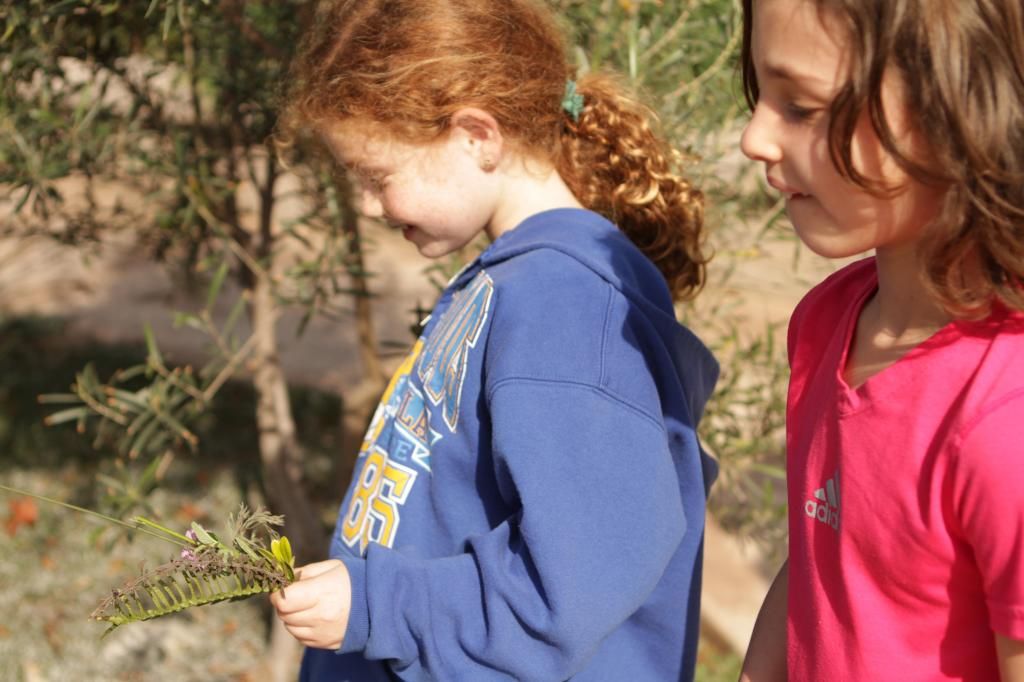
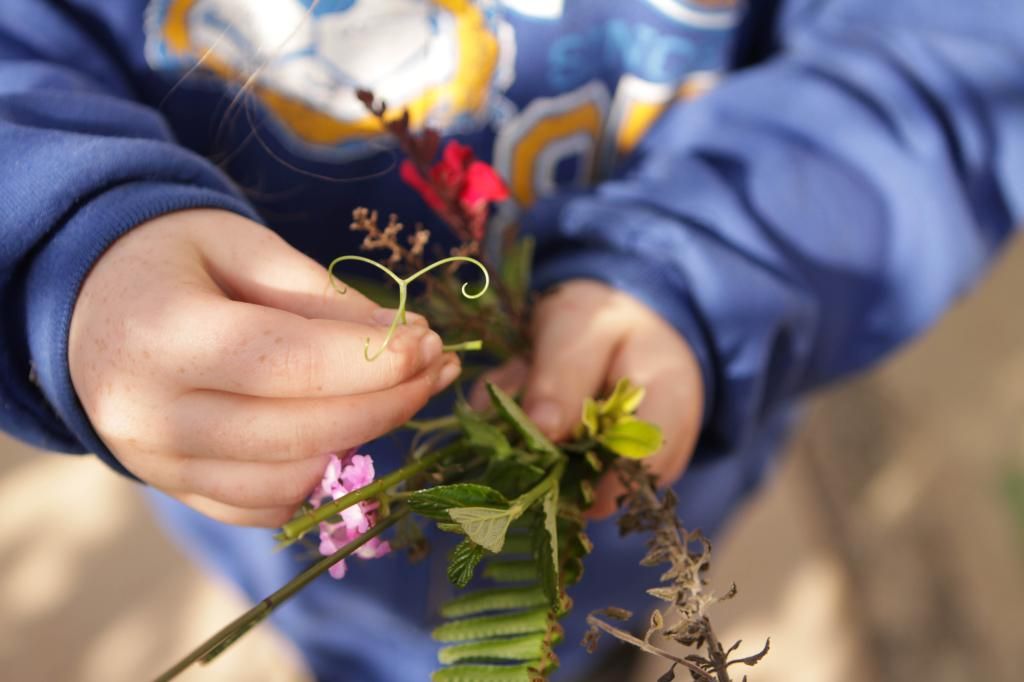
The first rotation was in the Discovery Garden where kids went on a flower scavenger hunt. They studied different types of flowers, their names and details and got to pick one or two and talked about their favorites. With a little time at the end they read A Fruit is a Suitcase for Seeds.


 Another Rotation explored the pulp where the seeds are made in mature peppers with magnifying glasses and talked about their observations. 


Seeds were harvested from the pulp and planted in composted soil in recycled seedling packs. 


The seeds came up like gangbusters in the greenhouse. This shot was taken 8 weeks later.


 In our third Rotation kids worked together to make delicious veggie ranch dip with Chef Giovanna and ate the peppers!


Thursday, April 30, 2015

Harvesting Aloe

This lesson in the gardening folder is a good one for learning about plant adaptation. As a desert plant, Aloe has to store water in its leaves as a special gel. The kids loved harvesting the aloe. They were mesmerized! Some could have done it the whole class period. 


Items Needed:

Aloe leaves- about 3 per student. We have bags and bags of aloe leaves behind Ms Brown's class by the worm bin. You can get a few aloe leaves from the aloe plants we have growing on campus. Or they grow wild around Los Angeles in yards and off the freeway.


Glass jars or Ziplock bags- I recommend having students share jars. Aloe gel can be sent home in plastic ziplock bags.

15 Plastic knives- for each student

15 Paper plates

Paper towels for cleanup

Bowls of Water

Library book- "Deserts" by Gail Gibbons in Overland Library (Call# 551.4 Gib)

Magnifying Glass from Gardening Drawers

Setup:
We setup on tables by the greenhouse. I put a knife on each plate and a glass jar in between two plates or on a plate to create stations. I filled two bowls with water and put several aloe leaves in there to get the dust and dirt off them so the gel would be clean and keeps the kids hands clean too.


Lesson:
Introduction in class:
Hold up the aloe leaf. Who knows what this kind of leaf is called? Where does it grow? Is there a lot of water in the desert? (No) But we all know that plants need water, so how has this plant adapted to grow in the desert? When it rains it stores all the water inside its leaves. It makes a special food that's like gel out of the water. It looks like this (hold open cross section of leaf). The gel is inside the leaf and makes it thick. The aloe has a serrated edge to protect the water inside of its leaf, and if it gets cut it can heal itself. This gel is used to help heal sunburns, cuts, and scrapes and has been used for thousands of years, they used it in ancient Egypt. It's antibacterial so it helps to keep things clean from germs. Today we are going to harvest the aloe gel from the aloe leaves.

Split into Groups:
We split into three 10 minute rotations. This was helpful because it's chaotic and overwhelming to start all the kids harvesting the aloe at once as it's very hands. Starting with a smaller group kept the activity calm throughout. Another group joined them after 10 minutes. The new group observed- which helped make the transition smoother and the 1st group stayed longer. I wouldn't recommend having everyone at the tables at once. Not every group did every rotation, but every group harvested aloe. Most kids were done after about 20 minutes and then needed a change. 

Rotation 1- Aloe Scavenger Hunt around the school. Working off the leaf you give them from the in-class discussion have kids find all the Aloe plants growing in the school. There are two large aloe plants in the primary beds in front of the 1st grade classes and two small ones in the planter bed right outside the main auditorium entrance. Point out other succulents. Look at class garden bed as well to observe what's going on with the plants and name each plant. Write in nature journals.

Rotation 2- Read Book "Deserts" by Gail Gibbons in class (Overland library Call# 551.4 Gib), or other desert book in that section. Focus on pages about succulent plants.


Rotation 3- Harvest Aloe. Have each student hold up an aloe leaf. Use the plastic knife to cut the flat bottom off the aloe (the first time they do this need lots of help) and this reveals the gel. 
Observe the gel with the magnifying glass. What do you notice about it visually? How does it feel? Scrape the gel into the glass jars. 


Schedule
1:30-1:40 Set up
1:40-1:45 Introduce Lesson
1:45-1:50 Split into 3 groups
1:50-2:05 Rotation 1
2:02-2:12 Rotation 2
2:14-2:24 Rotation 3 (we didn't follow those times exactly)

Wednesday, April 15, 2015

Strawberry Jam

We made jam and ate it on our Agriculture Week bread. I think this may have been all around the funnest lesson for the kids. They were so excited to make and eat fresh jam! After tasting this stuff you will want to throw away all your Smuckers jars.


Here's what you need to make enough for 24 kids with 4 oz jars (or half filled 8oz jars ;). Just increase ratios per directions if you want to make more jam in bigger jars and/or for more kids:

3lbs fresh strawberries (you can often get these at the Dollar Store)

3 Gallon size ziplock bags filled with 4 cups of sugar each

2 dozen (or 3 dozen depending on class size) 4oz jars with lids (you can also get 8oz jars from Smart and Final for cheaper than Amazon but 4oz is easier to fill- or ask kids to bring jars from home)

3 batches of Pectin in individual jars. I use this Premium Pectin from Smart and Final. You can also use this Pectin - check the recipe as the amounts may be slightly different than what I have listed.


6 T Lemon juice to activate pectin

6 Quart size Ziplock bags for strawberries

Extra Gallon size ziplocks

A 1 cup or 2cup measurement cup


Prep:
6 bags of Strawberries- Divide each 1 lb box in half and put it into its own quart size ziplock bag (so you have six bags of strawberries). Wash and hull the strawberries as close to lesson time as possible. You can also have the kids hull or tear off the stems at school. Get all the air out of the bag and seal tightly.

3 jars of pectin- Open each bag of pectin and squeeze completely into its own jar. Add the 2 T lemon juice to activate and seal tightly. You will have three jars of pectin.

3 bags of sugar- with 4 cups measured exactly in each bag. It won't work if the amount isn't exact.

Jars for each student- If you have time run the jars through the dishwasher or rinse with soapy water.

Lesson at school:
Introduction/Discussion- Open the lesson by introducing the ingredients of the jam 1) Strawberries: Where do the berries com from? flowers become fruit/strawberries with seeds on the outside 2) Sugar: Does anyone know how long it takes for sugar to go bad? It lasts forever (because it inhibits microbial growth). The sugar will preserve the strawberries (they would go bad otherwise) and was used in ancient times until we had fridges as a food preservative. 3) Pectin: What is it? pectin is made from the fiber of a plant (cell walls) and is a gelling agent to give the fruit form and shape. (similar to gelatin but gelatin is made from animal collagen).

Tell them they will be mashing strawberries and mixing them with sugar and pectin. Do Not dig fingernails in the bag! Do Not pound or punch the bag. If the bag gets opened to release air, add pectin or sugar or for any reason make sure it is sealed tightly before proceeding.

Divide kids into 6 groups at outdoor tables. Give each group a bag of strawberries to mash with their hands. It will take at least 5 minutes to get the puree smooth. Kids can take turns with the bag or do it in pairs. Encourage them to go for as long as they can.


Once the strawberries are mashed and smooth carefully measure one cup of mashed strawberries from two bags. So you have a total of 2 mashed strawberry cups in 1 bag of sugar. Mix it well for several minutes. It's amazing how liquidey it gets.


Let the bag sit for a few minutes then add the pectin. Pour the jam into jars leaving a little space at the top. Any excess jam can get poured in the empty pectin jars. It's best to let it set for 24 hours but sometimes it's also easier to just take it straight home! Tell the kids to set it on the counter and eat it the next day (if they can wait that long).


We also ate some jam with our bread from Agriculture Week. Kids loved it, and then they are more likely to eat it at home.

I highly recommend sending out an email to all the parents in the class telling them about the jam and they should leave it on the counter overnight, then put it in the fridge. Otherwise most of them won't know and it will sit in their kids' backpacks before they wind up just throwing it away and they'll miss out on the world's best jam!


Thursday, March 19, 2015

Agriculture Week Bread Lesson

The kids loved loved loved making bread for Agriculture Week!

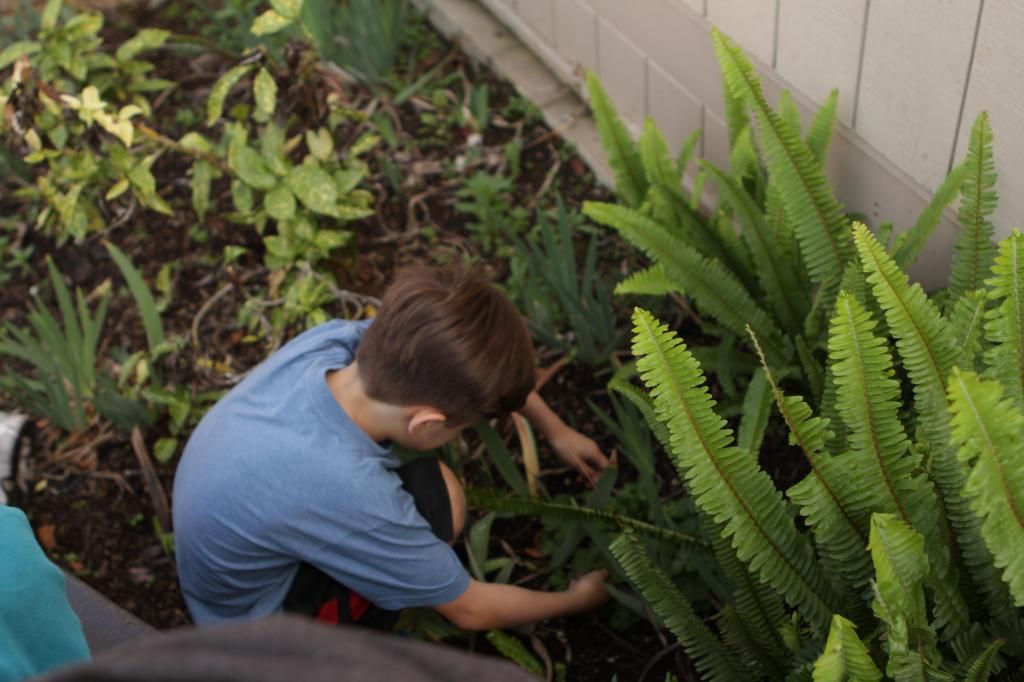
We did three stations: Book-Reading (at Discovery Garden/Class), Bread-Making (outside tables), and Weeding/Planting/Observing at the Garden Bed.

'The Little Red Hen' is a perfect book tie in. Each step of the wheat/bread process is detailed- seeds, growing, threshing, milling and baking. There are several copies in the library under Call# 398.2 LIT
After reading we checked out the green wheat growing in the Science lab garden bed in the Discovery garden that the 1st graders started at the beginning of the year.


For the bread-making station I spent about 10 minutes getting ingredients in little bags/containers for each group. One group makes one loaf and needs the following ingredients:
1/2T salt
2T oil
4 1/2c flour
1/2T sugar (don't totally need this)
Yeast (see below)
You also need a bowl, large spoon, and cutting board or something to knead on (I used new cardboard from the copy room also)


The yeast container was prepared right before I left with 1 1/2c warm water, 1T yeast and 1tsp sugar. It was nice and bubbly when we used it about an hour later and I brought some yeast to show the kids what I used.


We started by putting 1/4 of the bag of flour into the bowl. (Also a great math tie-in. How many 1/4's will we use?) The amount doesn't have to be perfect- eyeballing worked great. Then we added all the other little containers.


And mixed it.


We kept adding flour a quarter of the bag at a time. When you get to the end you may need only a little bit of the last quarter. You just want to be able to start kneading the dough and make sure it isn't too sticky. This recipe is pretty flexible, and when you start kneading you can add more flour if you need. We divided the dough into four balls so it's easier to work with and everyone could knead. With a bigger group kids can also take turns with a partner.


When kneading flatten the dough, fold it, and turn it. Kneading just makes the dough more stretchy. We kneaded for about 3-5 minutes. All the kids in the group really liked it. I wiped everything down with wet paper towels when we finished.

In the end I kneaded all their balls together and put it in the empty flour Ziplock bag and stuck it in my freezer (before I ran an errand and let it sit in my hot car for an hour!).

Around 3pm the day before our next gardening lesson at 1:30pm I took it out of the freezer and put it in a large bowl I sprayed with cooking oil. I let it thaw and rise overnight (I'd say stick to within 3 hours of that timeframe). 2 hours before the lesson I shaped the dough into 2 long loaves on the pan, then an hour later baked at 350F for about 45 minutes. Fresh hot bread. Yum. Went perfectly with our next lesson- jam making.


Tuesday, February 17, 2015

What's your Favorite Squash?

Check out Cathy's lesson in Ms Penn's class. Her kids loved exploring in their garden, and she brought in 7 different types of squashes for them to explore and play with before each group talked about their favorite squash and why.


Wednesday, February 4, 2015

Stems Lesson

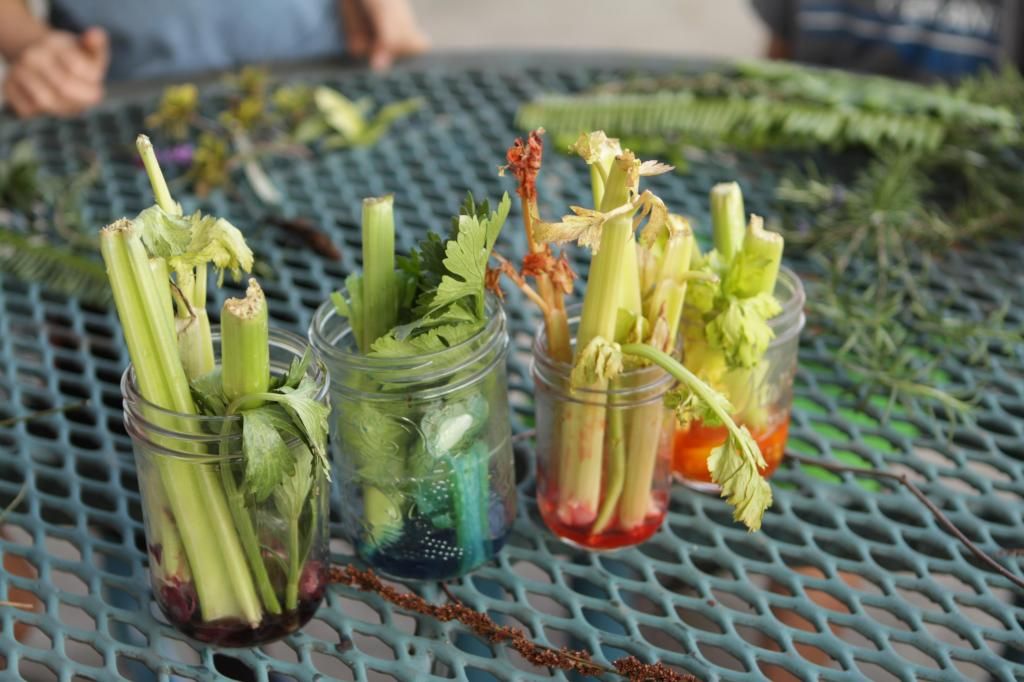
This was a really fun lesson (get the lesson plan here)- other than the ol' celery stems in colored water that wasn't a lot of prep. I did that 2 boys beforehand.

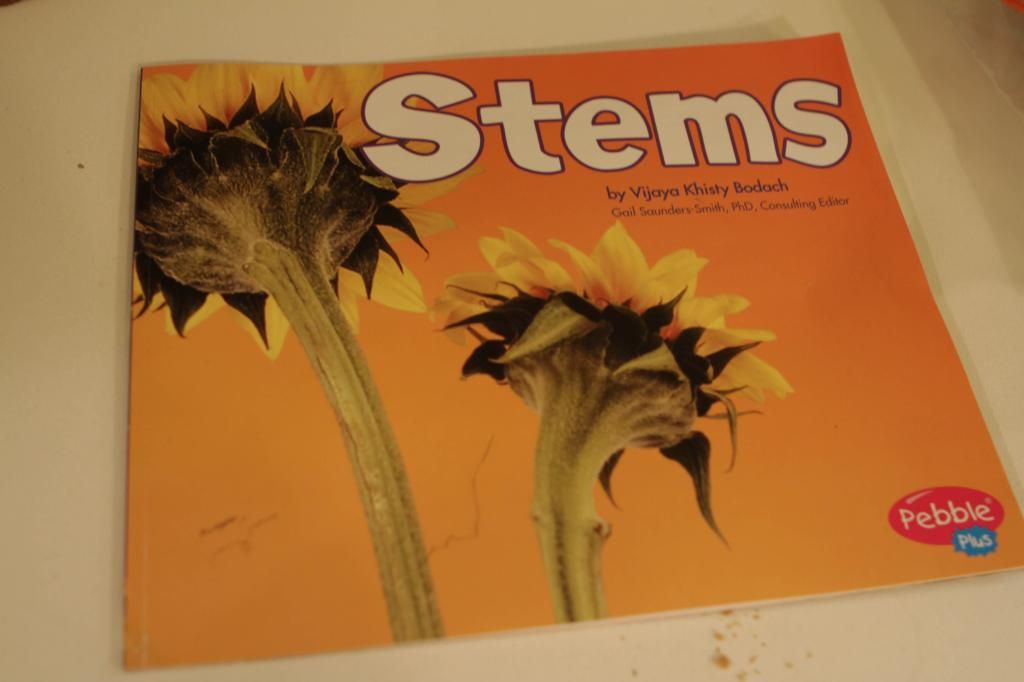
Started with reading this book- it's great because it gets kids thinking about the variety of stems

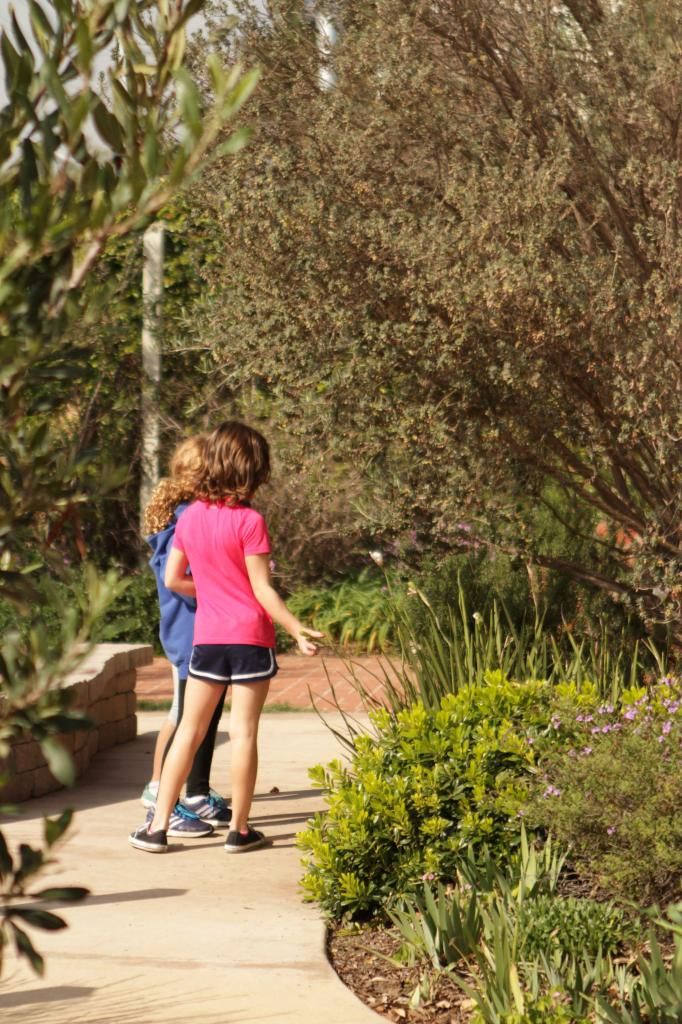
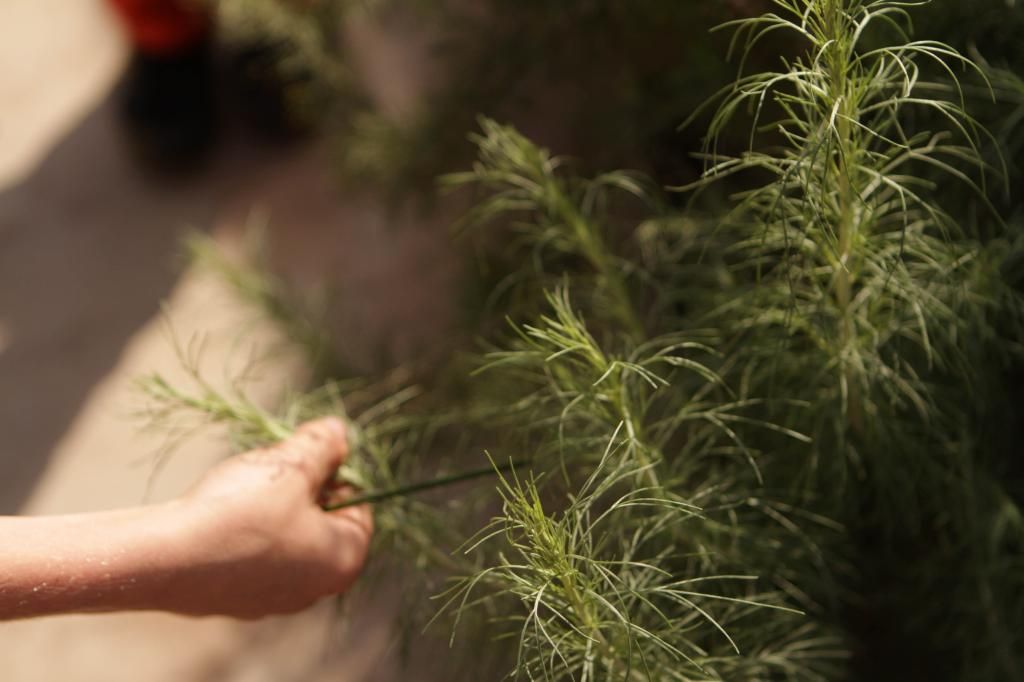
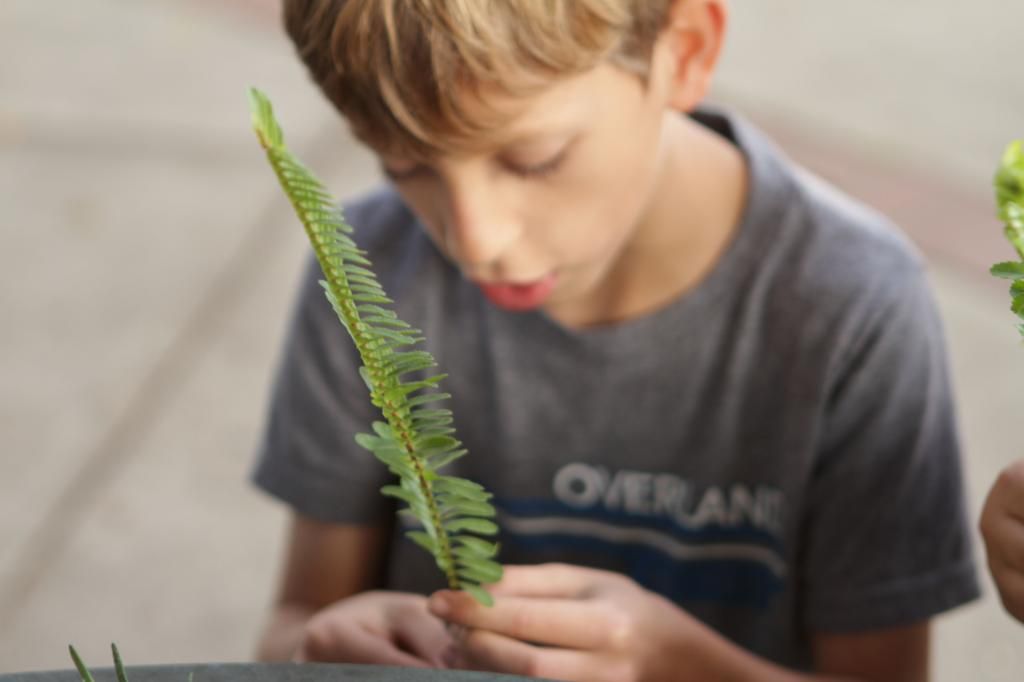
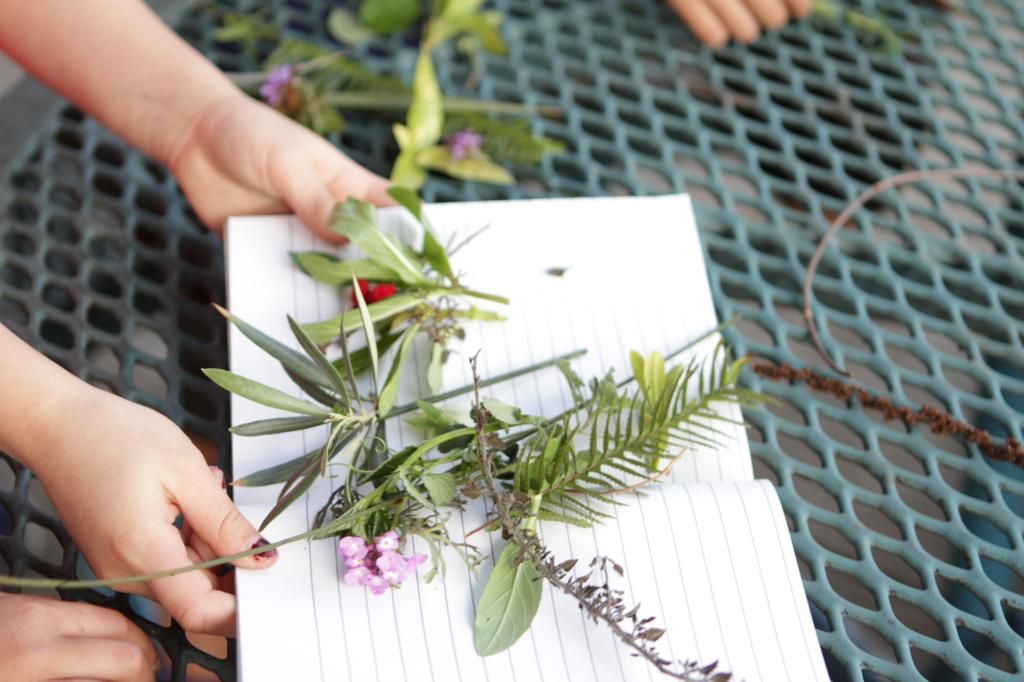
Then we broke the kids into rotations. Rotation 1 was a scavenger hunt for stems in the Discovery Garden- they were told to partner up and find at least 10 different stems.  I was surprised how much the kids engaged with this.


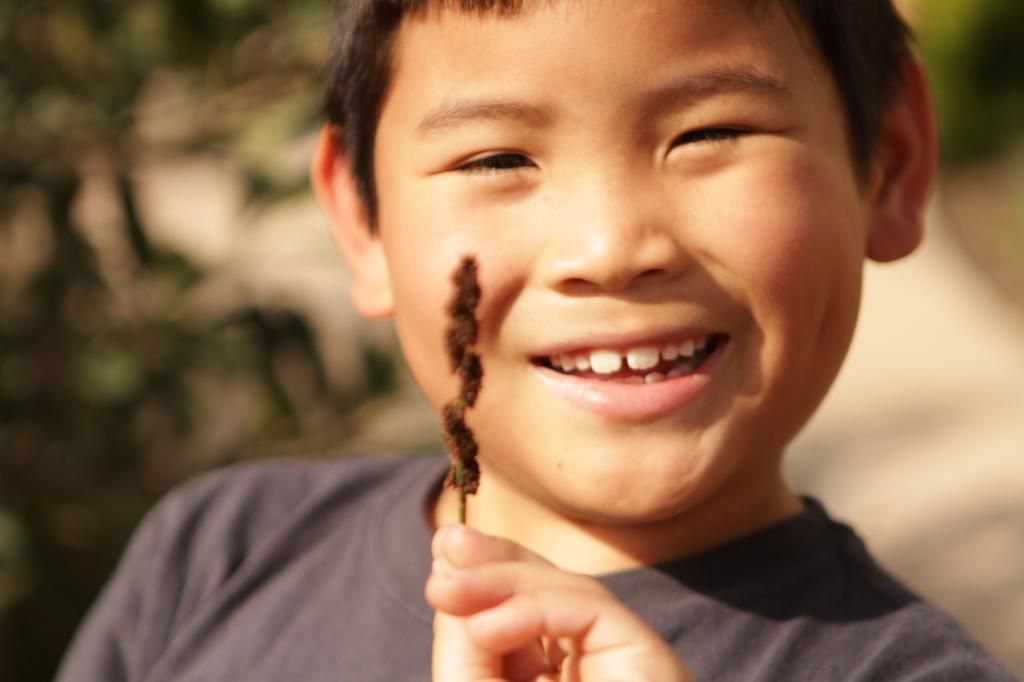
They were a very careful group so I told them they could pinch a couple samples off the tops of plants with lots of stems on them. But you can also just have the kids write down or share descriptions. 


They talked about their favorites at the end. We had a little time to write a few notes about their stems in their Nature Journals, but for longer classes (this was only 45min) that is an option. We used words like "woody, firm, soft" and noticed how some stems were more rigid that had lots of leaves on them, and the ones with flowers were very soft and green.


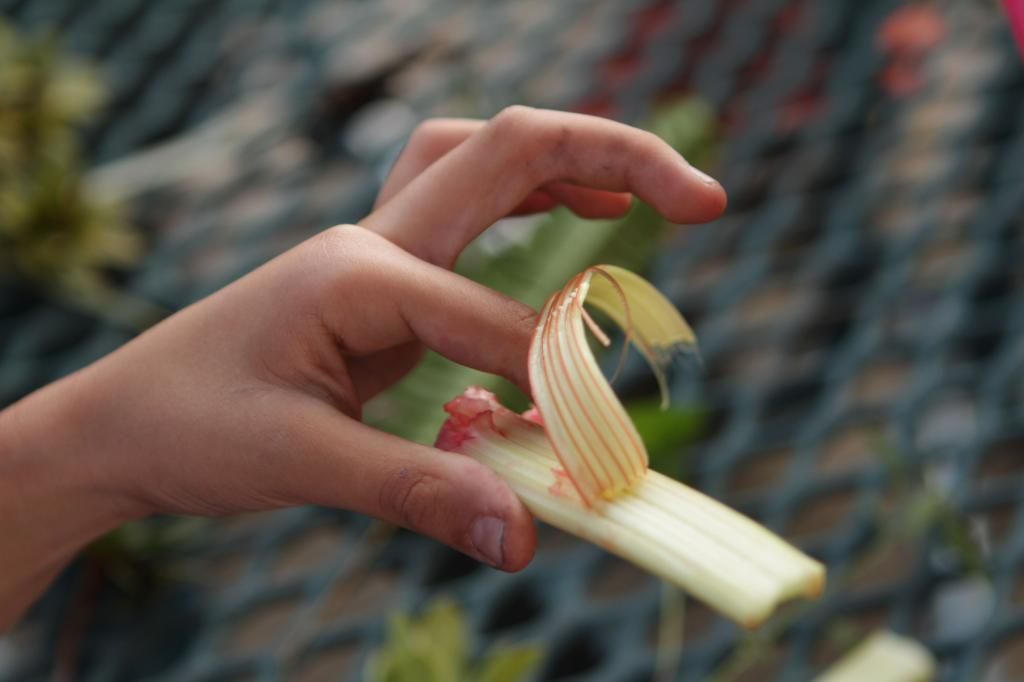
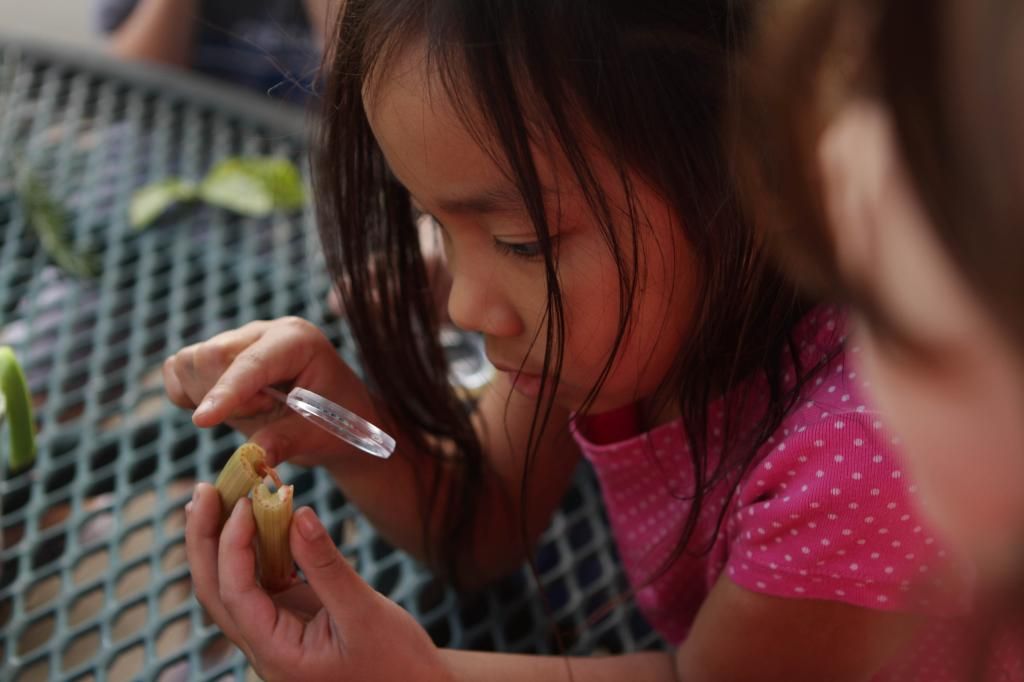
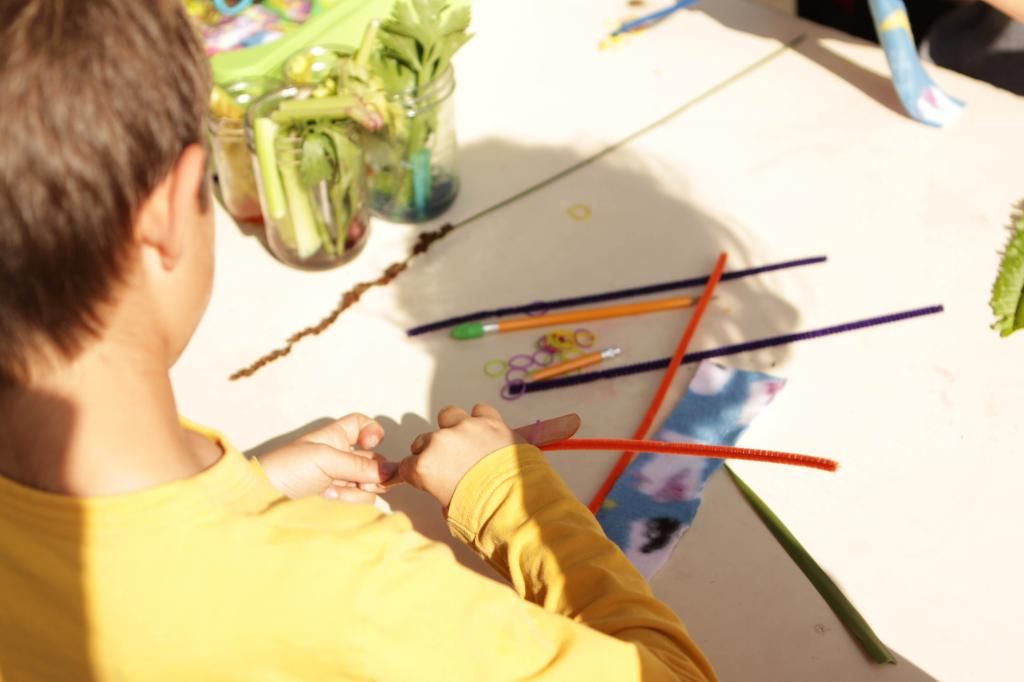
Rotation 2 was observing celery sticks. These don't look so pretty, (all the water spilled out on the way over!) but they were cool to observe. The kids split them open and we talked about the parts of the stem that carry the water like pipes.


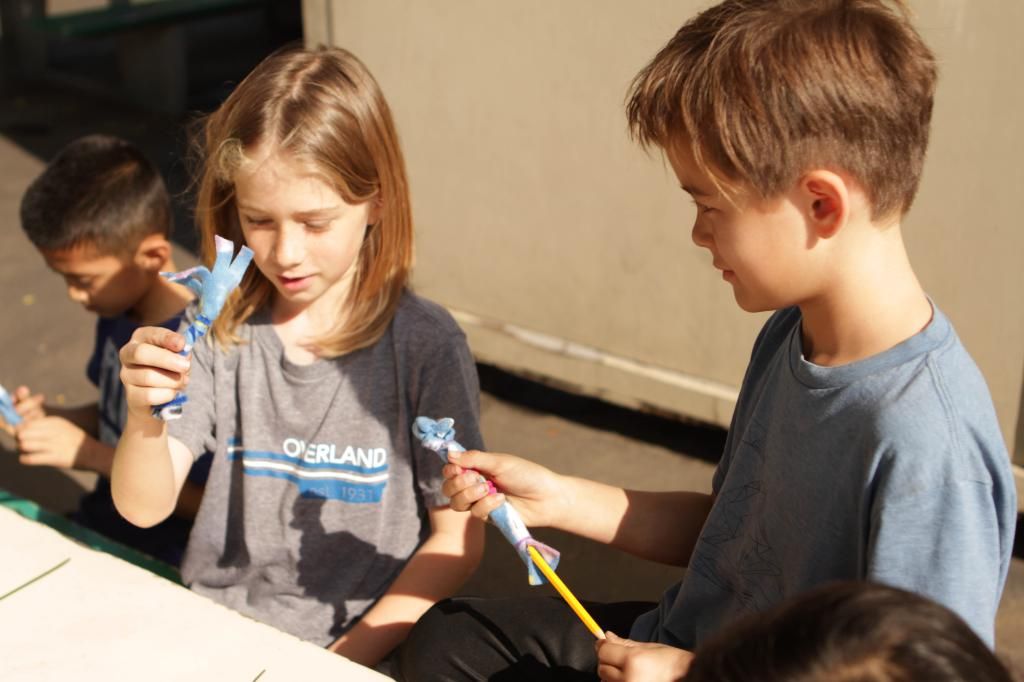
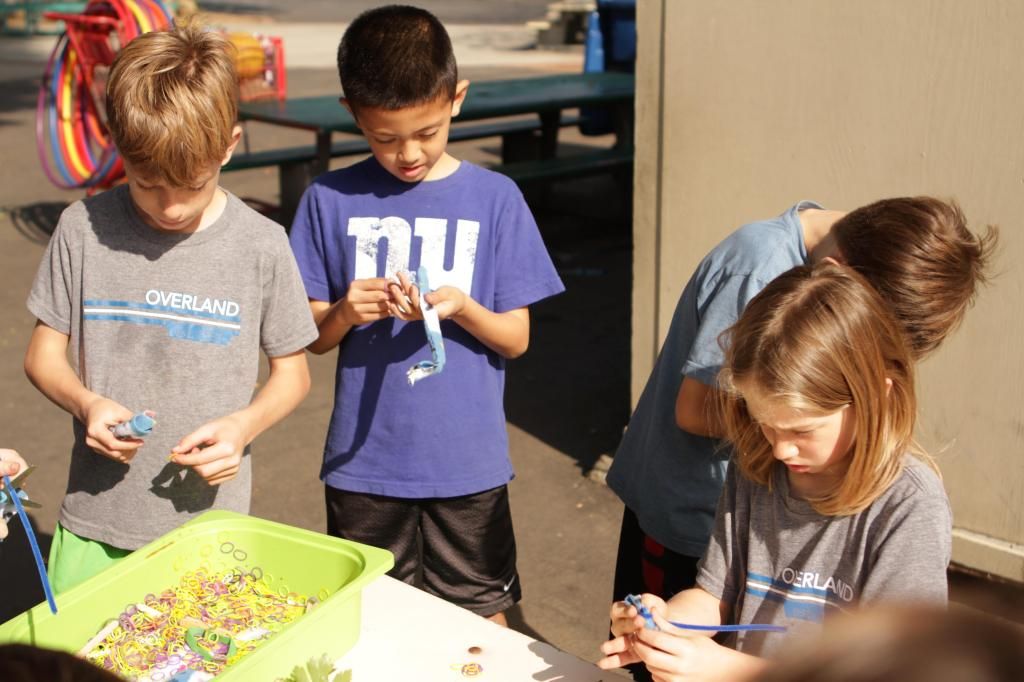
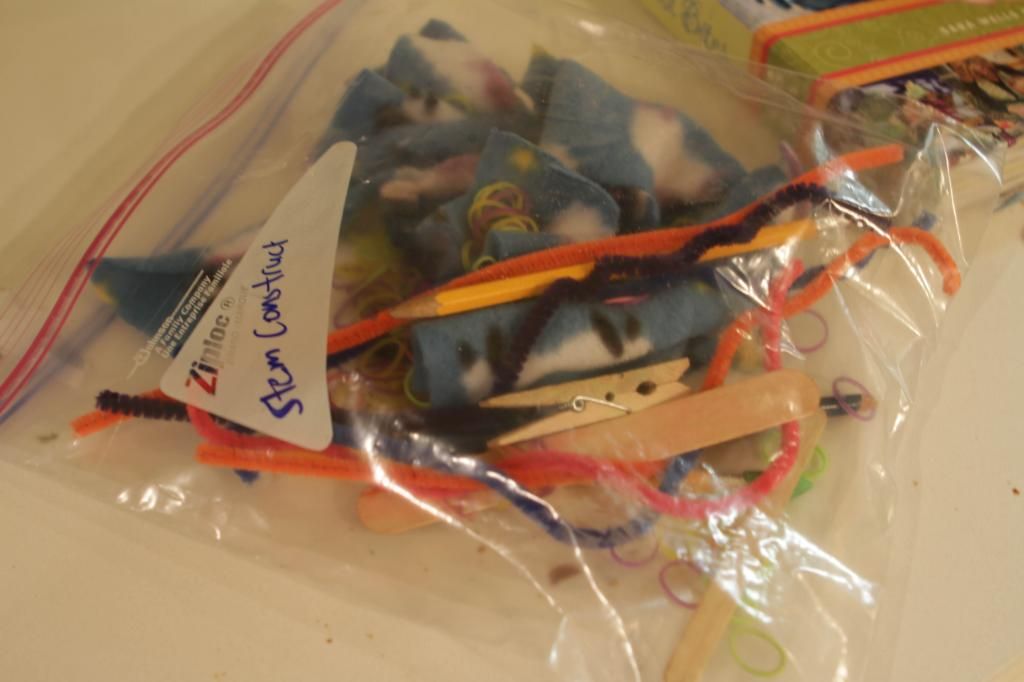
Kids wrote down observations in the celery handout. After they observed the celery (this took about 5+ minutes, kids constructed stems. I gave them each a scrap of fabric and asked them to build a stem out of it with a few other objects. We talked about the properties of stems and how they have to be rigid and have structure. They really liked this.


The stem construction bag is in the Gardening Parent drawers.


The third station was Garden Observation and writing in their nature journals. I also had a stem handout from the lesson folder.